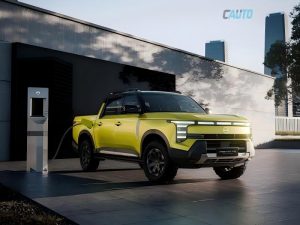
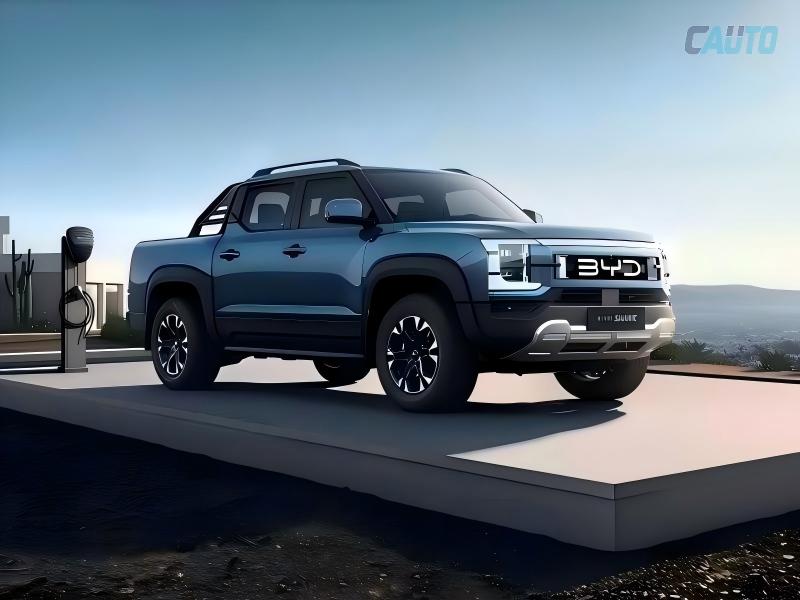
BYD Shark 6— Super-Hybrid Off-Road Pickup Truck
BYD Shark is a mid-size dual-cab pickup that ends the compromise between capability and efficiency. Its DMO super-hybrid drivetrain pairs a longitudinal 1.5-litre turbo engine
Contact Us for Pricing
Interested in this product? Contact us now for detailed pricing and product information.
Product Details
BYD Shark 6— The World’s First Super-Hybrid Off-Road Pickup Truck
DMO Plug-in Hybrid AWD | 430 hp | 5.7 s 0–100 km/h | From ≈ USD 35,000 (market-dependent)
Marketed in Australia, New Zealand and South Africa as the BYD Shark 6
About the BYD Shark
The BYD Shark is BYD’s first pickup truck — and it made history as the brand’s first-ever global debut outside China, launching in Mexico in May 2024. Built on BYD’s dedicated DMO (Dual Mode Off-Road) super-hybrid platform, the Shark is one of the world’s first mass-produced plug-in hybrid 4×4 pickups, engineered from day one for global markets. Since launch it has rolled out across Mexico, Brazil, Australia, New Zealand, Thailand, the UAE, South Africa, the Philippines and the UK, quickly becoming a best-seller: in 2025 it was Australia’s best-selling plug-in hybrid vehicle of any kind, taking around 8.5% of the country’s fiercely competitive 4×4 ute segment. Reviewers across the Americas and Australia consistently praise its refined ride, sports-car acceleration and dramatically lower running costs versus traditional diesel pickups.
Product Overview
The BYD Shark is a mid-size dual-cab pickup that ends the compromise between capability and efficiency. Its DMO super-hybrid drivetrain pairs a longitudinal 1.5-litre turbo engine with front and rear electric motors for a combined 321 kW (430 hp) and 650 N·m, launching from 0–100 km/h in just 5.7 seconds — quicker than any diesel rival, and most sports sedans. A 29.58 kWh Blade Battery delivers up to 100 km of pure-electric range (NEDC) for silent, zero-fuel daily driving, while a full tank plus full charge takes you 840 km without stopping. Unlike traditional pickups, the Shark rides on double-wishbone independent suspension front and rear — no leaf springs — giving it SUV-level comfort on-road and genuine toughness off it. And with 6 kW V2L external discharge, it doubles as a mobile power station for campsites, tools and worksites.
Key Highlights
- DMO super-hybrid 4×4 — 1.5T engine + dual motors, 430 hp / 650 N·m, electric AWD
- 5.7 s 0–100 km/h — faster than every diesel mid-size pickup on sale
- 100 km pure-electric range (NEDC) — daily driving with zero fuel; 840 km combined range
- 7.5 L/100 km charge-depleting — ~40% lower fuel use than comparable diesel pickups
- 2,500 kg braked towing / ~790 kg payload / 1,450 L tub — a true working truck 6 kW V2L external discharge — power tools, camping gear and appliances anywhere
- 4 terrain modes (Sand, Mud, Snow, Gravel) + intelligent electric 4WD, no transfer-case lag
- Double-wishbone suspension all round — the only pickup in class without leaf springs
Variants
| Variant | Powertrain | Combined Output | Towing | Notes |
|---|---|---|---|---|
| Shark GL / Premium | 1.5T DMO PHEV | 321 kW / 650 N·m | 2,500 kg | Core dual-cab pickup |
| Shark 6 Dynamic Cab Chassis | 1.5T DMO PHEV | 321 kW / 650 N·m | 2,500 kg | Cab-chassis for custom trays & work bodies (Australia) |
| Shark 6 Performance | 2.0T DMO PHEV | 350 kW / 700 N·m | 3,500 kg | 5.5 s 0–100 km/h, Crawl Mode for rock & steep terrain |
Availability varies by market. Contact CAUTO Global for export configurations, RHD/LHD options and market-specific pricing.
DMO Super-Hybrid Powertrain
- Engine: 1.5L turbocharged petrol, 135 kW, longitudinally mounted
- Motors: front 170 kW + rear 150 kW — intelligent electric four-wheel drive
- Combined output: 321 kW (430 hp) / 650 N·m
- Acceleration: 0–100 km/h in 5.7 s · Top speed: 160 km/h
- Architecture: world’s first longitudinally-mounted range-extender hybrid layout; the engine primarily drives a generator, with direct front-wheel drive at highway cruise
- Battery: 29.58 kWh BYD Blade Battery (LFP) with CTC cell-to-chassis integration
- Electric range: 100 km NEDC (≈85 km WLTP) · Combined range: 840 km
- Charging: 55 kW DC fast charge (30–80% in ~21 min) · 7 kW AC
- V2L: up to 6 kW external discharge — run welders, compressors, fridges and lights from the tub
Capability & Utility
- Body: body-on-frame (non-load-bearing) construction
- Suspension: double-wishbone independent front AND rear — coil springs instead of leaf packs for a composed, car-like ride
- Dimensions (L × W × H): 5,457 × 1,971 × 1,925 mm · Wheelbase: 3,260 mm — the largest body in its class
- Ground clearance: 230 mm (unladen)
- Approach / ramp-over / departure angles: 31° / 17° / 19°
- Towing: 2,500 kg braked (3,500 kg on Performance) · Payload: up to ~835 kg
- Cargo tub: 1,450 L with sports bar, roof rails and side steps standard
- Fuel economy: 7.5 L/100 km charge-depleting; as low as ~1.5 L/100 km NEDC combined — a working truck with commuter-car fuel bills
Interior & Technology
- Class-leading 15.6-inch rotatable central touchscreen — the largest display in the segment — with wireless Apple CarPlay & Android Auto
- 10.25-inch digital instrument cluster + head-up display
- Hardcore cabin design: four-spoke D-shaped steering wheel, aircraft-style shifter and physical buttons for key functions
- Dual-zone climate control, power-adjustable seats, heated front seats
- Premium audio, multi-color ambient lighting
- 360° camera, adaptive cruise control, full ADAS suite (AEB, lane-keep, blind-spot, rear cross-traffic alert)
- 5-star ANCAP safety rating (Australian-market Shark 6)
Full Specifications
| Specification | BYD Shark (Standard) | Shark 6 Performance |
|---|---|---|
| Vehicle type | Mid-size dual-cab pickup, 5 seats | Mid-size dual-cab pickup, 5 seats |
| Platform | DMO super-hybrid, body-on-frame | DMO super-hybrid, body-on-frame |
| Engine | 1.5T petrol, 135 kW | 2.0T petrol |
| Electric motors | Front 170 kW + Rear 150 kW | Upgraded dual motors |
| Combined power / torque | 321 kW (430 hp) / 650 N·m | 350 kW (469 hp) / 700 N·m |
| 0–100 km/h | 5.7 s | 5.5 s |
| Top speed | 160 km/h | 160 km/h |
| Battery | 29.58 kWh LFP Blade, CTC | 29.58 kWh LFP Blade, CTC |
| Electric range | 100 km NEDC / 85 km WLTP | 100 km NEDC / 85 km WLTP |
| Combined range | 840 km | 840 km |
| DC fast charge | 55 kW (30–80% ~21 min) | 55 kW (30–80% ~21 min) |
| V2L discharge | up to 6 kW | up to 6 kW |
| Towing (braked) | 2,500 kg | 3,500 kg |
| Payload | ~790–835 kg | ~790 kg |
| L × W × H | 5,457 × 1,971 × 1,925 mm | 5,457 × 1,971 × 1,925 mm |
| Wheelbase | 3,260 mm | 3,260 mm |
| Ground clearance | 230 mm | 230 mm |
| Suspension | Double-wishbone front & rear | Double-wishbone front & rear |
| Safety rating | 5-star ANCAP | 5-star ANCAP |
Specifications per export-market models; equipment varies by market and trim. The Shark is not currently sold in China domestically (a Formula Leopard-badged domestic version has been announced). Prices vary by market — Mexico from ≈ USD 47,000, Australia from AUD 57,900, UK from GBP 47,290. Contact CAUTO Global for export quotations.
Frequently Asked Questions (FAQ)
Q1: What is the BYD Shark pickup truck?
The BYD Shark (sold as the Shark 6 in Australia, New Zealand and South Africa) is a mid-size plug-in hybrid dual-cab pickup truck built on BYD’s DMO super-hybrid off-road platform. It combines a 1.5-litre turbo engine with front and rear electric motors for 321 kW (430 hp) of combined power, 5.7-second 0–100 km/h acceleration, 100 km of pure-electric range and 840 km of combined range. It was BYD’s first-ever vehicle to debut outside China, launching in Mexico in May 2024, and is now sold across Latin America, Australia, Southeast Asia, the Middle East, Africa and the UK.
Q2: How far can the BYD Shark drive on electricity, and what is its fuel consumption?
The Shark’s 29.58 kWh Blade Battery provides up to 100 km of pure-electric range (NEDC; ~85 km WLTP) — enough for most daily driving with zero fuel. With a full tank and full charge, combined range reaches 840 km. Fuel consumption in charge-depleting mode is 7.5 L/100 km, roughly 40% lower than comparable diesel pickups, and as low as ~1.5 L/100 km in NEDC combined mode. A 55 kW DC fast charger restores 30–80% battery in about 21 minutes.
Q3: Can the BYD Shark tow and work like a traditional pickup?
Yes. The Shark has a body-on-frame chassis, 2,500 kg braked towing capacity (3,500 kg on the Performance variant), a payload of up to ~835 kg, and a 1,450 L cargo tub. It offers Sand, Mud, Snow and Gravel terrain modes with intelligent electric 4WD. Its key advantage over traditional trucks is the double-wishbone independent rear suspension — no leaf springs — delivering far better ride comfort, plus a 6 kW V2L outlet that powers worksite tools and camping equipment directly from the vehicle.
Q4: How can I import the BYD Shark pickup to my country?
CAUTO Global provides a complete one-stop export service for the BYD Shark. We handle factory sourcing, pre-shipment inspection, and all export documentation — commercial invoice, packing list, bill of lading, certificate of origin and export license — plus destination-market compliance support. We ship to more than 50 countries across Asia, the Middle East, Africa, Europe and the Americas via RoRo or container shipping, with typical delivery times of 15–45 days. Both RHD and LHD configurations can be sourced depending on your market.
Q5: What are CAUTO Global’s supply chain and logistics advantages for vehicle export?
CAUTO Global is headquartered in Hubei, China — one of China’s core automotive manufacturing hubs — with over 10 years of export experience .Our advantages include: (1) stable factory allocation and factory-direct pricing with priority order fulfillment; (2) a mature logistics network covering RoRo and container shipping with full marine insurance, port handling and real-time tracking; (3) container consolidation that lowers per-unit freight cost on multi-vehicle orders; (4) RHD/LHD sourcing and certification support for WVTA, GCC, Euro 5/6 and other regional standards; and (5) complete documentation handling for smooth customs clearance. Typical door-to-port delivery is 15–45 days depending on destination.