
Published: September 2026 | Audience: Panama B2B car Importers, Dealers & Fleet Operators
Shipping an electric vehicle from China to Panama is not like shipping a container of furniture or a pallet of electronics. The lithium-ion battery that powers the vehicle classifies the entire shipment as Class 9 dangerous goods under international maritime law. One incorrect UN number, one missing document, or one improperly declared battery state of charge can result in port rejection, customs delays, or—worst case—cargo destruction.
Yet despite the regulatory complexity, sea freight remains the most cost-effective and reliable method for moving Chinese EVs to Panama. With the right preparation, the right shipping method, and the right documentation, a vehicle can move from a Shanghai factory to Balboa Port in 30–45 days, cleared through Panama’s National Customs Authority (ANA) in 3–7 business days, and registered with ATTT shortly thereafter.
This guide walks through every step of how to ship an electric car from China to Panama by sea in 2026—from selecting the shipping method to navigating the new IMDG dangerous goods regulations to clearing customs under Law 295’s 0% tariff exemption.
Step 1: Choose Your Shipping Method—RoRo vs. Container
There are two primary methods for shipping vehicles by sea from China to Panama. The choice depends on your budget, vehicle value, order volume, and risk tolerance.
Method A: RoRo (Roll-on/Roll-off)
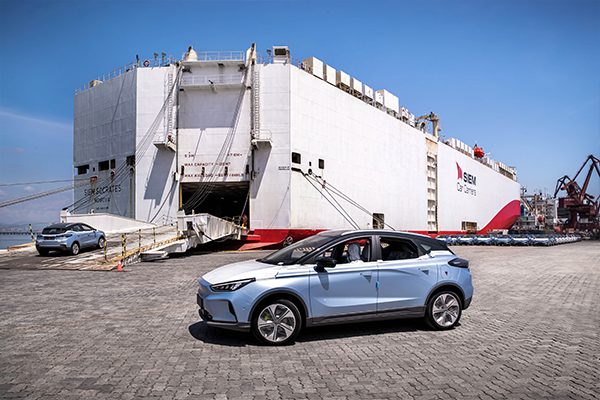
RoRo is the most common method for shipping operational vehicles. The car is driven onto the vessel at the Chinese port, secured in a dedicated vehicle hold, and driven off at Balboa or Colón.
| Factor | RoRo Details |
|---|---|
| Cost per vehicle | 1,500–1,500–2,500-3,000usd (China to Panama) |
| Transit time | 30–45 days port-to-port |
| Best for | Operational vehicles; single units or small lots |
| Advantages | Most economical; no crating needed; fastest booking |
| Risks | Vehicle exposed to marine environment; potential salt/humidity exposure |
| Carriers | COSCO, Grimaldi, Wallenius Wilhelmsen |
When to Choose RoRo: If you are shipping 1–10 operational vehicles and cost is your primary concern, RoRo is the standard choice. It is the method used by most direct importers bringing BYD, Geely, and Chery vehicles into Panama.
Method B: Container Shipping (FCL or LCL)
Container shipping places the vehicle inside a sealed 20-foot or 40-foot container, offering superior protection against salt spray, humidity, and physical damage during the Pacific crossing.
| Factor | Container Details |
|---|---|
| Cost per vehicle | 2,500–2,500–3,800 (FCL 40′); 1,800–1,800–2,500 (LCL shared) |
| Transit time | 35–50 days port-to-port |
| Best for | High-value vehicles; non-operational units; bulk shipments |
| Advantages | Maximum protection; can include spare parts/accessories; lower per-unit cost at volume |
| Risks | Higher cost for single units; requires proper blocking/bracing inside container |
| Carriers | Maersk, MSC, COSCO, CMA CGM |
When to Choose Container: If you are shipping premium vehicles (Zeekr 001, BYD Seal, Li Auto L9), non-operational units, or consolidating 2-3–4 vehicles in a single 40-foot container, the additional protection justifies the cost. Container shipping is also preferred for vehicles with low ground clearance that might struggle with RoRo ramps.
Step 2: Understand the 2026 Dangerous Goods Regulations
Electric vehicles are not classified as “general cargo.” The lithium-ion traction battery that powers the vehicle makes the entire shipment Class 9 dangerous goods under the International Maritime Dangerous Goods (IMDG) Code. In 2026, the rules have tightened significantly.
Critical Regulatory Changes (Effective January 1, 2026)
1. IMDG Code Amendment 42-24 Is Now Mandatory
The 2022 edition of the IMDG Code is obsolete. All shipments moving in 2026 must comply with Amendment 42-24, which introduces stricter requirements for battery-powered vehicles.
2. UN 3556 Replaces UN 3171
Vehicles powered by lithium-ion batteries must now be classified under UN 3556 (Lithium-ion battery-powered vehicles). The previous classification, UN 3171 (Battery-powered vehicles), is no longer permitted as of January 1, 2026. Bookings using UN 3171 will be rejected by carriers.
| Old Classification | New Classification | Applies To |
|---|---|---|
| UN 3171 (obsolete) | UN 3556 | Lithium-ion battery-powered vehicles |
| — | UN 3557 | Lithium metal battery-powered vehicles |
| — | UN 3558 | Sodium-ion battery-powered vehicles |
3. Battery State of Charge (SoC) Requirements
Unlike air freight—which mandates a strict 30% SoC cap for lithium batteries—ocean freight has no universal state-of-charge limit for EVs. However, individual carriers may impose their own requirements, and BYD’s factory export protocol typically ships vehicles at 30–50% SoC as a safety precaution.
4. Mandatory Documentation
Every EV shipment by sea must include:
| Document | Purpose | Source |
|---|---|---|
| Dangerous Goods Declaration (DGD) | Declares UN 3556 classification, battery specs, SoC | Shipper/freight forwarder |
| UN 38.3 Test Summary | Proves battery has passed safety testing | Vehicle manufacturer |
| Material Safety Data Sheet (MSDS) | Details battery chemistry, hazards, handling | Vehicle manufacturer |
| Certificate of Origin | Required for Panama’s 0% tariff under Law 295 | Chamber of Commerce in China |
| Commercial Invoice | Vehicle price, VIN, specifications | Seller |
| Bill of Lading (B/L) | Contract of carriage; proof of shipment | Ocean carrier |
| Packing Certificate | Confirms proper stowage and securing | Freight forwarder |
5. Container Loading Requirements
For container shipments, vehicles must be:
- Properly blocked and braced to prevent movement
- Secured with lashings rated for maritime conditions
- Loaded with battery disconnect procedures documented
- Segregated from incompatible cargo (flammable liquids, oxidizers)
Step 3: Select Your Departure Port in China
The choice of Chinese departure port affects both cost and transit time:
| Port | Location | Advantages | Best For |
|---|---|---|---|
| Shanghai | Yangtze River Delta | Most competitive 40′ rates; highest carrier density; frequent sailings | Large-volume orders; BYD vehicles (Shenzhen factory often ships via Shanghai) |
| Shenzhen (Yantian/Shekou) | Pearl River Delta | Highest sailing frequency to Latin America; closest to BYD/Chery/Geely factories | Time-sensitive shipments; Guangdong-based suppliers |
| Ningbo | Zhejiang | Often cheaper than Shanghai; less congestion | Cost-sensitive importers; LCL consolidation |
| Guangzhou (Nansha) | Pearl River Delta | Convenient for PRD suppliers; competitive rates | Regional suppliers; lower sailing frequency acceptable |
Recommendation: For BYD vehicles manufactured in Shenzhen, shipping from Shenzhen Yantian or Shekou minimizes inland trucking costs and reduces total transit time by 2–3 days. For Geely vehicles from Hangzhou/Ningbo, Ningbo Port is optimal.
Step 4: Book Your Shipment and Prepare Documentation
Timeline: From Booking to Departure
| Stage | Duration | Action Required |
|---|---|---|
| Booking confirmation | 3–5 days | Submit shipping instructions, DGD, UN 38.3 summary |
| Carrier review | 2–3 days | Carrier verifies DG classification and documentation completeness |
| Port delivery | 1–2 days | Vehicle delivered to port; physical inspection |
| Customs export clearance (China) | 1–2 days | Chinese customs verifies export documentation |
| Vessel loading | 1–2 days | Vehicle loaded and secured; B/L issued |
| Total: Booking to sailing | 8–14 days | — |
Common Reasons for Booking Rejection
Carriers reject approximately 15–20% of initial EV bookings due to documentation errors. The most common causes:
- Using obsolete UN 3171 instead of UN 3556
- Missing UN 38.3 test summary or expired test report
- Incorrect SoC declaration (if carrier requires specific levels)
- Incomplete dangerous goods declaration (missing battery watt-hour rating, cell count, chemistry)
- Misdeclared cargo (attempting to classify EV as “automobile parts” to avoid DG fees)
Critical Warning: Misdeclaring an EV as non-dangerous goods is not merely a paperwork error—it is a violation of international maritime law that can result in cargo seizure, fines, and criminal liability. Always declare EVs accurately under UN 3556.
Step 5: Transit and Tracking
The China–Panama Route
Most EV shipments from China to Panama follow one of two routes:
Route A: Direct Pacific Crossing
- Departure: Shanghai / Shenzhen / Ningbo
- Transit: Direct to Balboa Port (Panama Canal Pacific entrance)
- Duration: 28–35 days
- Advantage: Fastest; no transshipment risk
Route B: Transshipment via Busan / Long Beach
- Departure: Chinese port
- Transshipment: Busan (Korea) or Long Beach (USA)
- Arrival: Balboa Port
- Duration: 35–45 days
- Advantage: More sailing options; potentially lower rates
Tracking Your Shipment
Once the vessel departs, you can track progress using:
- Carrier websites: COSCO, Maersk, MSC all offer real-time container/vessel tracking
- MarineTraffic / VesselFinder: Live vessel positions and ETA updates
- Freight forwarder portals: Consolidated tracking across multiple carriers
Step 6: Arrival at Balboa or Colón Port
Port Options
| Port | Location | Best For |
|---|---|---|
| Balboa | Pacific entrance to Panama Canal | Most RoRo and container vessels; closest to Panama City |
| Colón | Caribbean side | Alternative for transshipment cargo; closer to Free Zone |
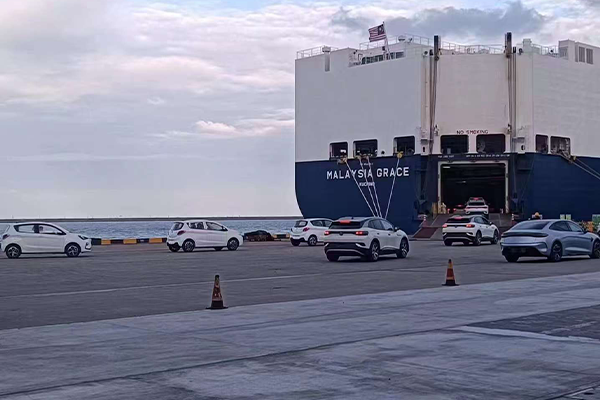
The majority of vehicle shipments from China arrive at Balboa Port due to direct Pacific routing.
Upon Arrival: What Happens
- Vessel berths and unloads (RoRo: vehicles driven off; Container: moved to yard for de-stuffing)
- Port authority inspection (visual verification against manifest)
- Customs broker notification (your authorized broker begins clearance process)
- Storage fees begin accruing (typically free for 3–5 days; then daily charges apply)
Critical: Have your customs broker ready to act immediately upon arrival. Port storage fees in Panama can reach 50–50–100 per day for vehicles, and delays compound quickly if documentation is incomplete.
Step 7: Panama Customs Clearance (ANA)
Panamanian law requires that all imports exceeding $500 CIF be processed by an authorized customs broker registered with the National Customs Authority (ANA).
The Clearance Process
| Step | Action | Timeline |
|---|---|---|
| 1. Pre-arrival declaration | Broker registers Import Declaration in ANA system | Before or immediately after vessel arrival |
| 2. Document verification | ANA reviews completeness; Certificate of Origin verified for 0% tariff | 1–2 business days |
| 3. ITBMS calculation | 7% ITBMS calculated on CIF value (vehicle + freight + insurance) | Same day |
| 4. ITBMS payment | Payment through authorized banking system | Same day |
| 5. Physical inspection (if triggered) | ANA may inspect to verify specifications match documents | 1–3 business days (if required) |
| 6. Vehicle release | Broker processes release (levante); vehicle exits port | Same day as payment |
| Total clearance time | — | 3–7 business days with complete documentation |
Required Documents for Panama Customs
- Commercial Invoice
- Bill of Lading (original or telex release)
- Packing List
- Certificate of Origin (mandatory for 0% tariff under Law 295)
- Dangerous Goods Declaration (copy for ANA records)
- Vehicle technical specifications (for ATTT homologation)
- Power of Attorney (authorizing customs broker)
The Certificate of Origin is non-negotiable. Without it, ANA will assess the full import duty (15–30% of CIF value), instantly erasing the EV’s cost advantage. This document must be obtained from China’s Chamber of Commerce before shipment, not after.
Source: PideTuCarro Import Guide, April 2026
Step 8: ATTT Homologation and Registration
Before the vehicle can be driven legally, it must be homologated by Panama’s Land Transit and Transportation Authority (ATTT).
Required Documents
- Cleared import declaration from ANA
- Original commercial invoice
- Certificate of origin
- Manufacturer’s technical datasheet
- ITBMS payment receipt
Cost Breakdown: Shipping a Chinese EV to Panama
Let us put it all together for a typical shipment—a BYD Dolphin Mini shipped via RoRo from Shenzhen to Balboa:
| Cost Item | Amount (USD) |
|---|---|
| Vehicle FOB Price | $12,000 |
| RoRo Freight (Shenzhen–Balboa) | $2,300 |
| Marine Insurance | $150 |
| CIF Value | $13,950 |
| Import Tariff (0% under Law 295) | $0 |
| ITBMS (7% on CIF) | $977 |
| Customs Broker Fees | $450 |
| Port Handling & Storage | $150 |
| ATTT Homologation | $200 |
| Total Landed Cost | ~$16,327 |
Working With a Specialized EV Export Partner
Shipping an electric vehicle across the Pacific involves three distinct domains of expertise: Chinese export regulations, international maritime dangerous goods law, and Panamanian import customs. Most importers are experts in none of these.
CAUTO Global—China Automotive Global Supply Chain Co., Limited—as a reliable china auto exporter , provides both Chinese car models and arrange shipping . Unlike generic freight forwarders who treat EVs as “just another car,” CAUTO Global specializes in lithium-battery vehicle exports
For Panamanian importers, working with a specialized automotive export partner delivers value before the vehicle even reaches the port: factory-side preparation ensuring correct SoC and complete manufacturer documentation, UN 3556 dangerous goods compliance to avoid carrier booking rejections, Certificate of Origin procurement from China’s Chamber of Commerce, multi-brand consolidation to reduce per-unit shipping costs, and pre-positioned customs documentation with ANA-authorized brokers.
Whether you are shipping one vehicle or twenty, having an experienced partner structure the transaction minimizes the three variables that destroy EV import profitability: customs delays, unexpected duty assessments, and port storage fees.
Frequently Asked Questions
Q: Can I ship a used electric car from China to Panama?
A: Technically yes, but the process is significantly more complex. Used EVs require battery condition verification, no total-loss certificates, and may face age restrictions (legislative proposals limit imports to 5 years old or newer). Most commercial importers focus exclusively on new vehicles.
Q: What is the cheapest way to ship an EV from China to Panama?
A: RoRo is the most cost-effective method for single units or sharing a 40-foot container .
Q: How long does sea freight from China to Panama take?
A: 30–45 days port-to-port for direct Pacific routes. Add 5–10 days for transshipment routes. Total door-to-door time (factory to Panama City delivery) is typically 45–60 days.
Q: What happens if my EV shipment is rejected by the carrier?
A: The most common rejection reasons are obsolete UN classification (using UN 3171 instead of UN 3556), missing UN 38.3 documentation, or incorrect SoC declaration. Working with a specialized EV export partner who verifies documentation before booking eliminates 95% of rejection risk.
Q: Do I need a special license to import EVs to Panama?
A: No special license is required, but all imports over $500 CIF must be cleared by an authorized customs broker.
Q: Is the battery safe during a 40-day ocean voyage?
A: Yes, when properly prepared. BYD and other major manufacturers ship EVs globally every day. Key precautions: 30–50% SoC, proper documentation under UN 3556, and secure stowage to prevent movement. Container shipping offers additional protection against salt spray and humidity.
Q: Can I track my vehicle during transit?
A: Yes. Ocean carriers provide vessel tracking via their websites. For RoRo shipments, the Bill of Lading number allows real-time tracking of the vessel’s position and estimated arrival time at Balboa Port.
Final Thoughts: The Supply Chain Is the Competitive Advantage
The Chinese EV revolution has already happened in manufacturing. The next revolution is in logistics—getting those vehicles from Shenzhen and Shanghai to Balboa and Colón efficiently, compliantly, and cost-effectively.
For Panamanian importers, the difference between a profitable EV import and a costly mistake often comes down to a single document: the Certificate of Origin, the UN 38.3 summary, or the dangerous goods declaration. Getting these right before the vessel sails is infinitely cheaper than fixing them after the cargo is stuck in port.
The 0% tariff window under Law 295 will not last forever. Every month of delay is a month of lost margin. The vehicles are available. The shipping routes are established. The regulatory framework is clear. The only remaining variable is execution.
CAUTO Global provides the specialized export infrastructure—from providing Chinese factory car models to Balboa Port customs clearance—that turns EV import complexity into competitive advantage. The market opportunity is real. The logistics capability exists. The connection is what matters.
Ready to ship your first electric vehicle from China to Panama? Start with a documentation checklist, confirm your carrier’s UN 3556 acceptance, and ensure your Certificate of Origin is in hand before the vehicle reaches the port.
Keywords: ship electric car China Panama, EV sea freight China Panama, RoRo shipping EV Panama, container shipping electric vehicle Panama, UN 3556 shipping, IMDG Code EV 2026, China to Balboa Port shipping, CAUTO Global, China auto expoeter,Law 295 Panama EV import